Research
The potential impacts of the new "decarbonization consensus" in Latin America. The case of Green Hydrogen in Chile, Colombia and Uruguay.
#energía renovable
#hidrógeno verde
#política energética
#conflictos ambientales
#colombia
#uruguay
#chile
#tesis
Published
May 14, 2026 16:42

Green hydrogen has appeared as an alternative to fossil fuels, an industrialization option for the Global South and the future in energy transitions. But is it really so?
This paper analyzes how green hydrogen policies in Chile, Colombia and Uruguay relate to the possibilities of a Just and Popular Energy Transition in Latin America.
This paper analyzes how green hydrogen policies in Chile, Colombia and Uruguay relate to the possibilities of a Just and Popular Energy Transition in Latin America.
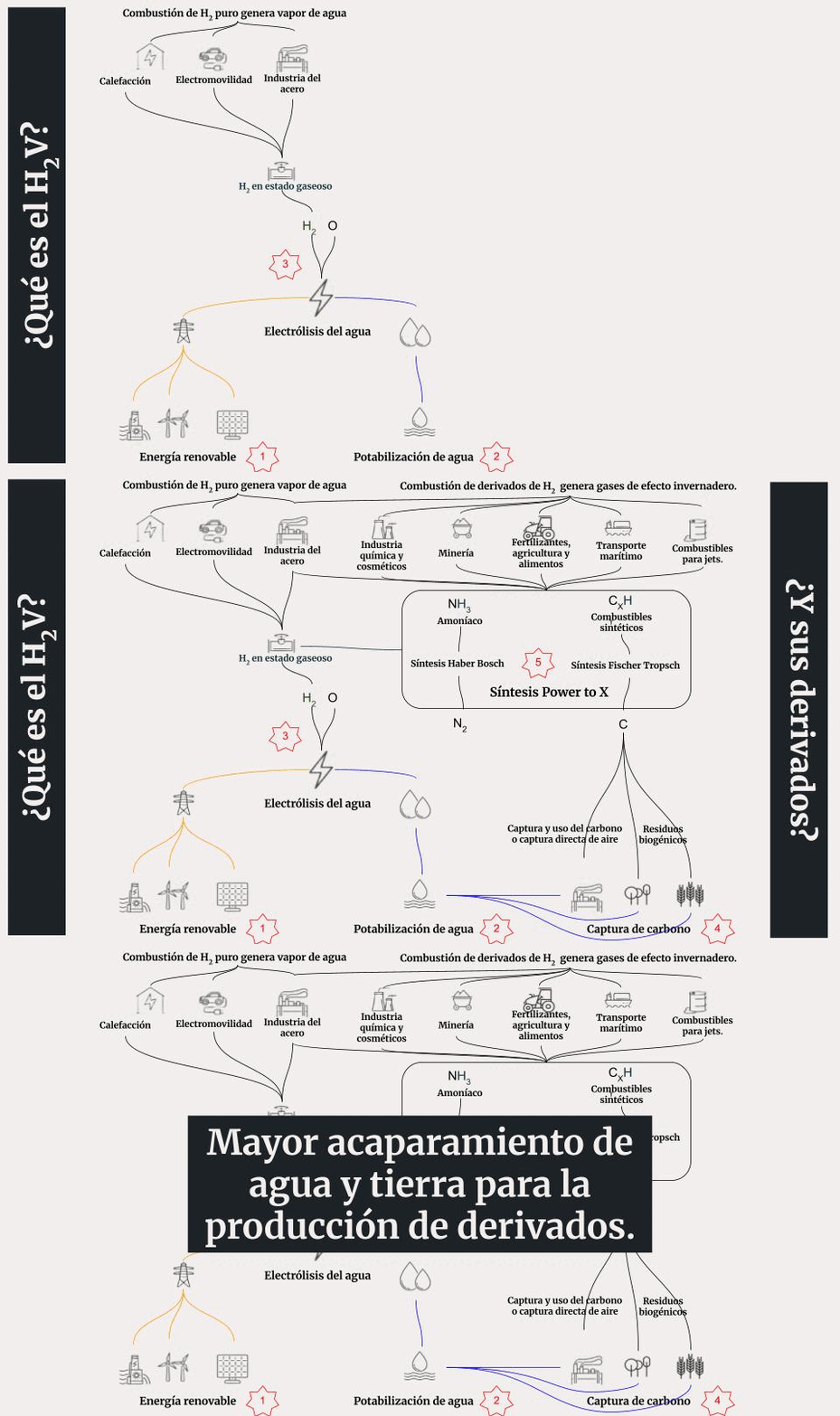
The main findings reveal an external influence of the European Union, which is pushing green hydrogen in the region as part of its decarbonization strategy and to eliminate its energy dependence on Russia, thus prioritizing its energy security and perpetuating asymmetric North-South relations. The siting of these projects requires countries to have abundant resources such as land, water and renewable energy, but key socio-environmental considerations are omitted.
A key finding on conflicts is the intensive use of water and land, which competes with local needs and generates risks for local, racialized and indigenous communities. In addition, policies are designed with a predominance of technical and corporate actors, marginalizing civil society and affected communities.
Read the full thesis by Martina Inés Casás Pino in the following link.
This research was carried out as a degree project within the framework of the International Master's Degree in Political Ecology and Alternatives to Development convened by the Environment and Sustainability Area of the Universidad Andina Simón Bolívar, Ecuador campus. For more information about the master's degree, please enter here https://www.uasb.edu.ec/programa/ecologia-politica-y-alternativas-al-desarrollo/