Research
Biocultural memories in times of neoextractivism: an ecolinguistic study in the Moxeño-Trinitarian community of Santísima Trinidad, TIPNIS Bolivia.
Published
May 12, 2026 15:43

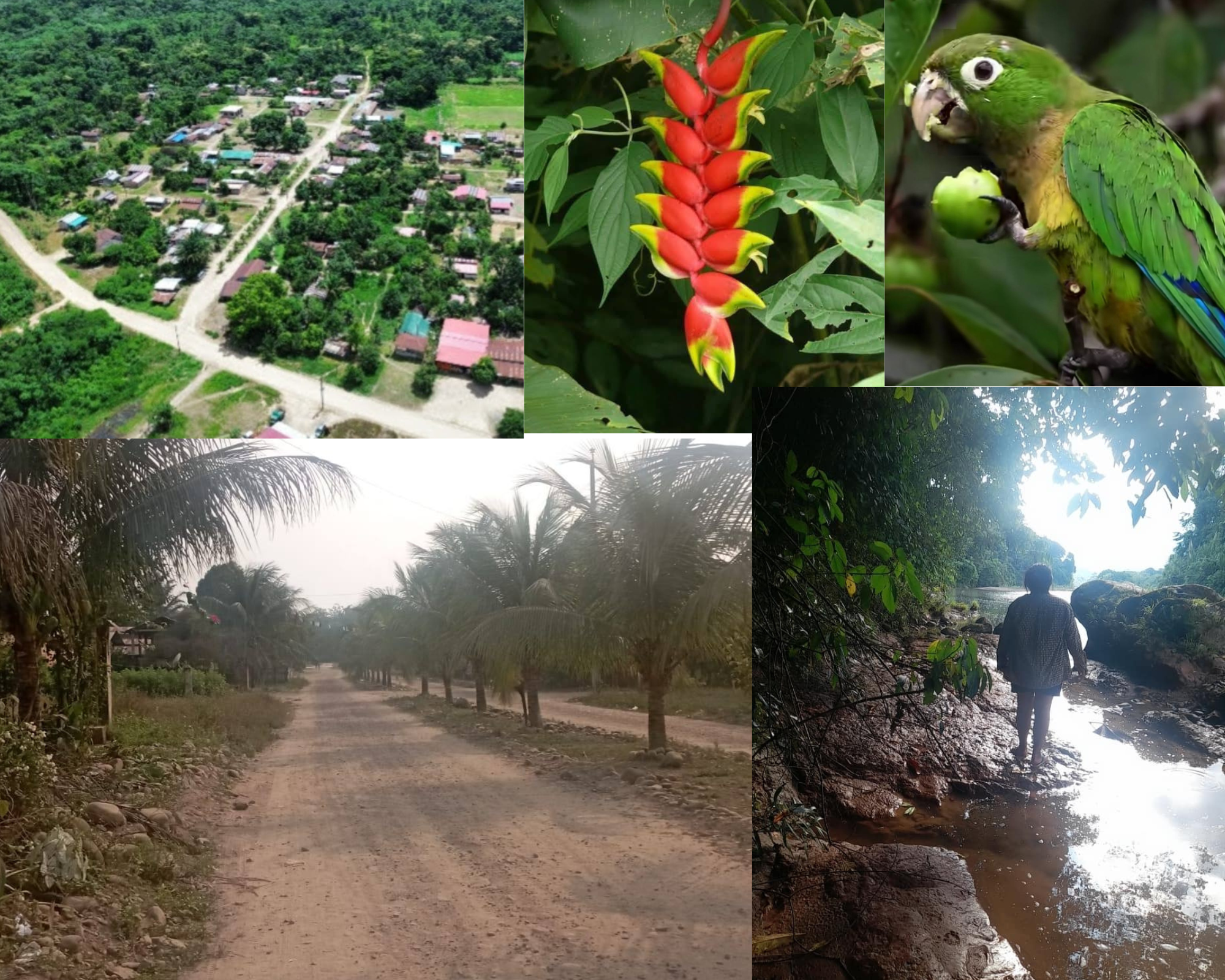
There was a time when the Moxeño people had a name for every whisper of the mountain. A name for the plant that cures the fever of the children, another for the tree that announces the rain, yet another for the particular silence that precedes the flood of the river. Words that were not only words, but maps, memories, ways of being in the world. That world is leaving. Not all at once. Not the way things leave in catastrophes. It is leaving like the river leaves in a drought, almost without anyone noticing, until one day the riverbed appears dry and one does not remember well when was the last time there was water and one heard it singing.
The Moxeña Trinitarian language is forgetting the name of the forest; and the forest, meanwhile, is also changing. A road crosses it, the coca leaf advances and the territory of always becomes disputed territory. The grandmothers still know. They keep in their hands and in their memory the knowledge of the plants that heal and the cycles that order life. But now they are islands, increasingly alone in a landscape that surrounds them and does not recognize them.
There are languages that name the world to inhabit it, to take care of it, to listen to it. And there are languages that name it in order to measure it, encircle it and sell it. When a biocentric language retreats and a capitalocentric language advances, it is a change of cosmology, not just an exchange of vocabulary. It is another kind of conquest. Losing a language is not like losing an object that can be searched for and found. It is more like losing a way of seeing, of naming, of belonging. And when that happens at the same time that the territory is lost, what is being lost is the whole world as a community knew it.
And if language can be a territory of conquest, it can also be a territory of resistance. To understand that is to understand that language has an ecology, and that ecology is profoundly political.
To read Danissa Candelaria Álvarez Salazar's thesis in full, you can enter here.
.
The Moxeña Trinitarian language is forgetting the name of the forest; and the forest, meanwhile, is also changing. A road crosses it, the coca leaf advances and the territory of always becomes disputed territory. The grandmothers still know. They keep in their hands and in their memory the knowledge of the plants that heal and the cycles that order life. But now they are islands, increasingly alone in a landscape that surrounds them and does not recognize them.
There are languages that name the world to inhabit it, to take care of it, to listen to it. And there are languages that name it in order to measure it, encircle it and sell it. When a biocentric language retreats and a capitalocentric language advances, it is a change of cosmology, not just an exchange of vocabulary. It is another kind of conquest. Losing a language is not like losing an object that can be searched for and found. It is more like losing a way of seeing, of naming, of belonging. And when that happens at the same time that the territory is lost, what is being lost is the whole world as a community knew it.
And if language can be a territory of conquest, it can also be a territory of resistance. To understand that is to understand that language has an ecology, and that ecology is profoundly political.
To read Danissa Candelaria Álvarez Salazar's thesis in full, you can enter here.
This research was carried out as a degree project within the framework of the International Master's Degree in Political Ecology and Alternatives to Development convened by the Environment and Sustainability Area of the Universidad Andina Simón Bolívar, Ecuador campus. For more information about the master's degree, please enter here https://www.uasb.edu.ec/programa/ecologia-politica-y-alternativas-al-desarrollo/